
QR Code for a Weddings: What They Are and How They Work
A wedding QR code is a scannable square code that opens a web page on a smartphone. Couples use QR codes on wedding signage to make it easier for guests to upload photos and videos directly to an upload page (your private gallery).
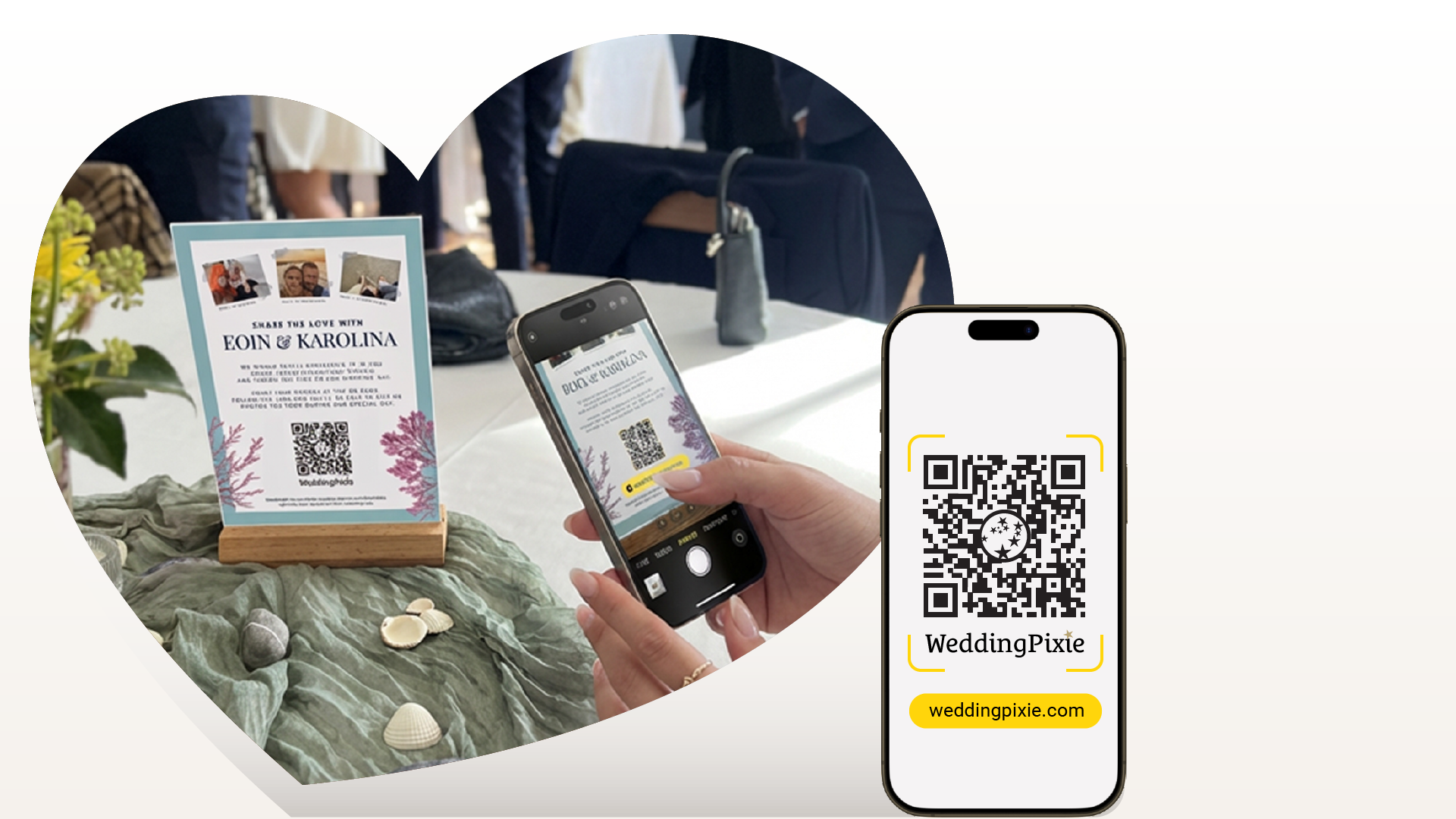
A QR code is a two-dimensional barcode that stores a web address. When scanned using a smartphone camera, it opens a linked webpage. QR codes were first developed in the 1990s for industrial tracking systems. You can read more about their technical background on Wikipedia.
At weddings, QR codes are commonly used to connect guests to an upload page. If you are exploring how QR codes integrate into overall wedding signage, see our signage styles overview.
How QR Codes Work at a Wedding
At a wedding, a couple creates a unique upload link. That link is converted into a QR code. The QR code is printed on signage or displayed digitally around the venue.
When guests scan the code, they are taken directly to the upload page where they can add their photos and videos. The QR code itself does not store images. It only opens the web link.
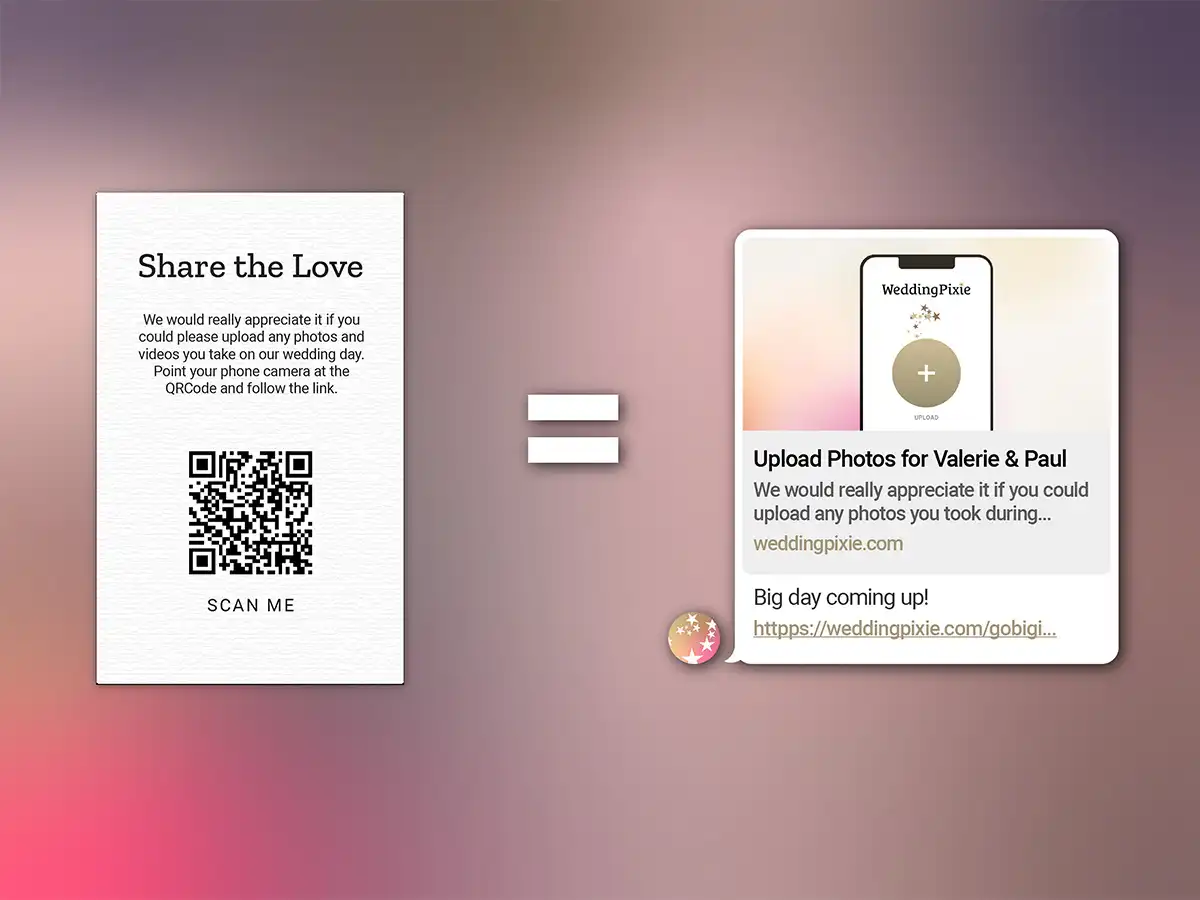
Platforms such as WeddingPixie generate an upload page and QR code when a couple creates an account. The principle is always the same: the QR code reduces friction between taking a photo and sharing it to your upload page.
Why Couples Use QR Codes
Couples use QR codes because they make photo sharing immediate. Guests do not need to type a web address or search through messages after the event.
QR codes also act as a clear invitation. When displayed on signage, they signal that photos are welcome and that there is a simple way to contribute.
While a direct link can also collect photos, QR codes are more effective during the wedding itself because they are visible and easy to access.
Where QR Codes Fit in Wedding Signage
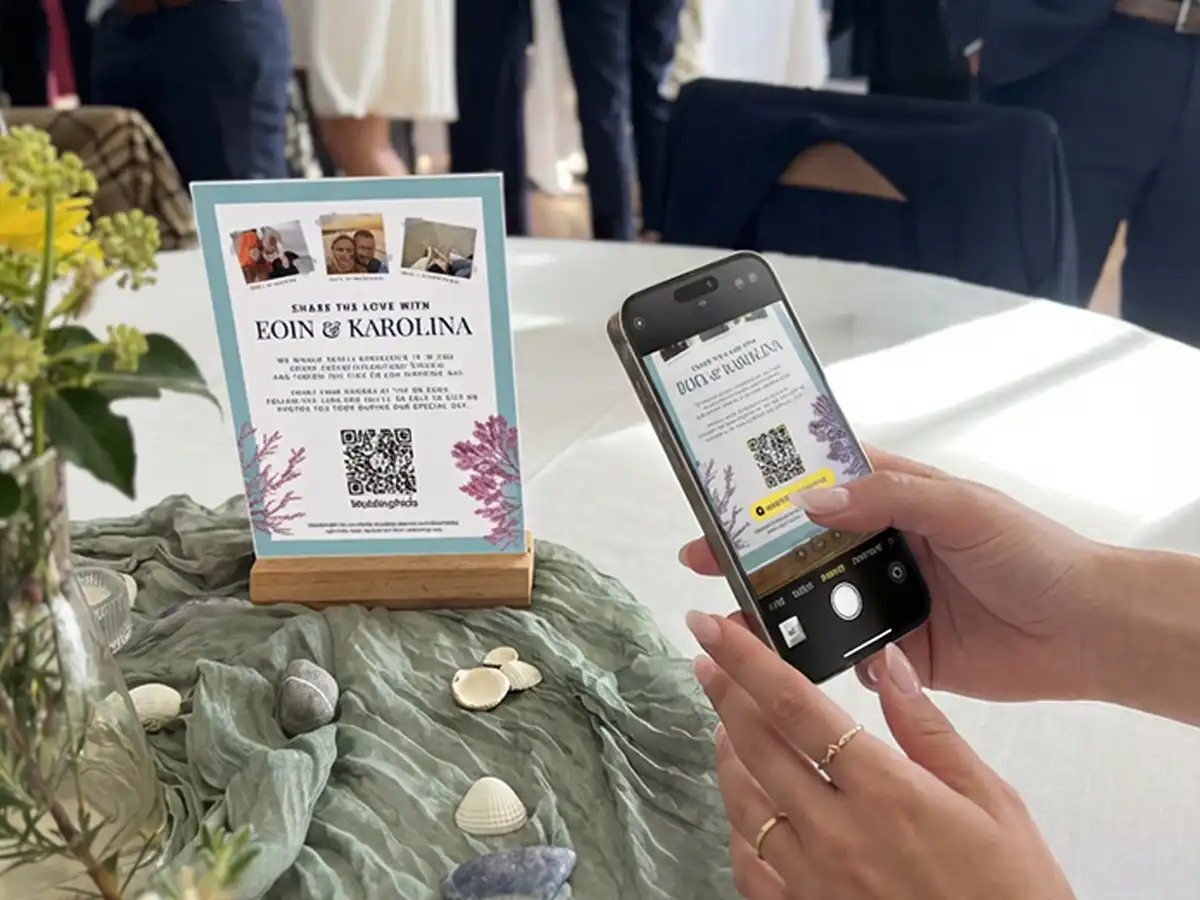
QR codes work best when integrated intentionally into wedding signage. Common placements include welcome boards, table cards, seating plans, menus, and digital displays.
They perform best in locations where guests naturally pause. Clear instructions such as “Scan to upload your photos” significantly increase participation.
For practical placement strategies, see our QR code placement guide.
Common Mistakes to Avoid
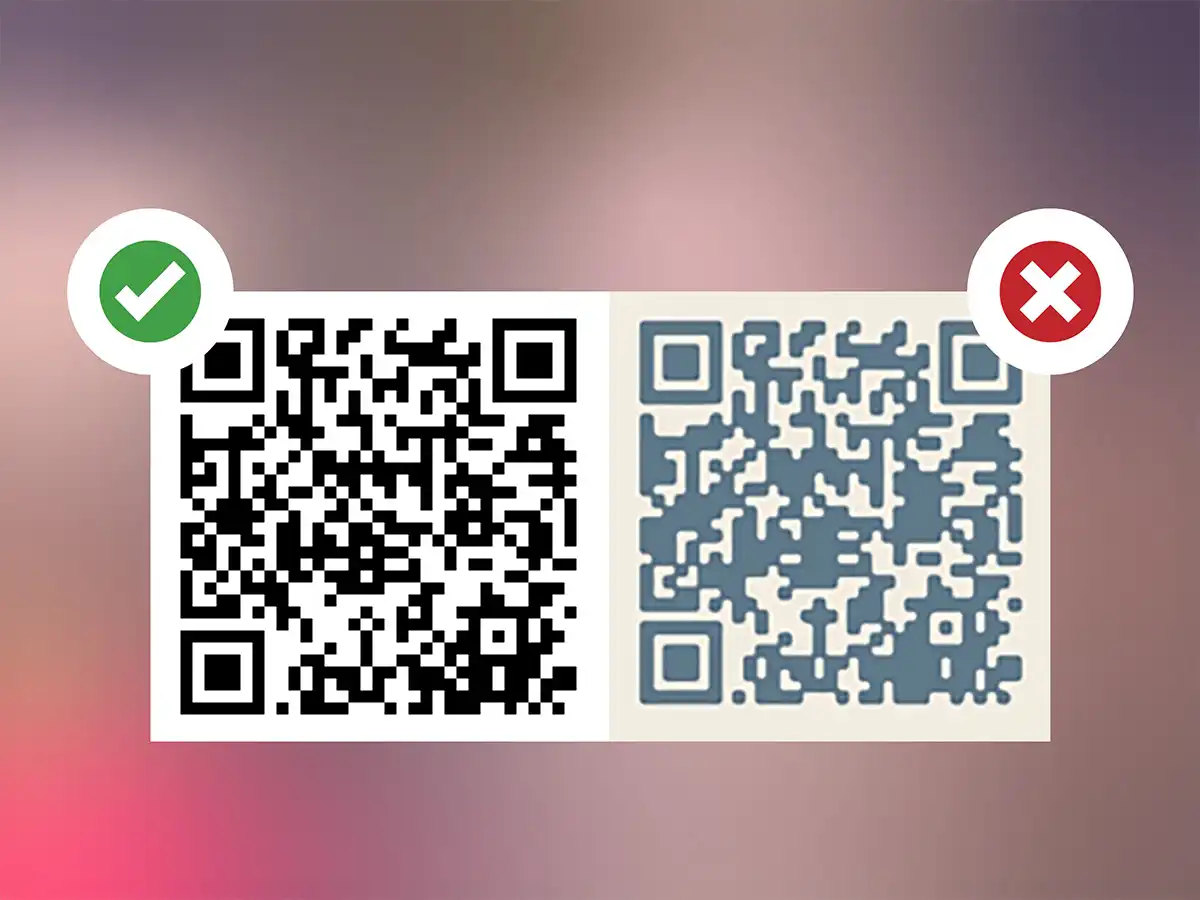
QR codes can fail if printed at low resolution or resized incorrectly. They must be tested after printing.
Codes that are too small may not scan reliably from a distance. High contrast, ideally black on white, produces the most dependable results.
For detailed size guidance, refer to our signage sizes guide. QR signage size guide.
Are Wedding QR Codes Here to Stay?
QR codes are now widely used in hospitality and events. Most guests are familiar with scanning them for menus and payments. Their use at weddings feels natural and convenient.
As weddings increasingly combine physical signage with digital experiences, QR codes provide a practical bridge between the two.
If you would like to design your own signage, follow our guide to make a QR code card.
For placement strategy, see our QR code placement tips.
For sizing guidance, consult our QR signage size guide.
Frequently Asked Questions
- Do I need a QR code to collect wedding photos?
- No. You can collect guest photos by sharing a direct upload link by text or email. A QR code mainly helps because it makes the link effortless to access during the wedding itself.
- Will guests need an app to scan a wedding QR code?
- Most modern smartphones can scan QR codes directly using the built-in camera app.
- What’s the best size for a wedding QR code?
- The correct size depends on how far away guests will scan from. Larger signs require larger codes printed at high resolution.
- Where should I place QR codes at my wedding?
- Place QR codes where guests naturally pause, such as at drinks receptions, dinner tables, or near the seating plan.
- What can go wrong with wedding QR codes?
- Poor print quality, low contrast, or codes that are too small can prevent reliable scanning.


