
Where to Place Wedding QR Codes for Maximum Impact
QR codes work best when they feel intentional. Rather than placing a single sign in one location, think about your wedding timeline and the moments you may not see yourself. Strategic placement allows you to capture the anticipation before the ceremony, the energy of the drinks reception, and the spontaneity of the dance floor.
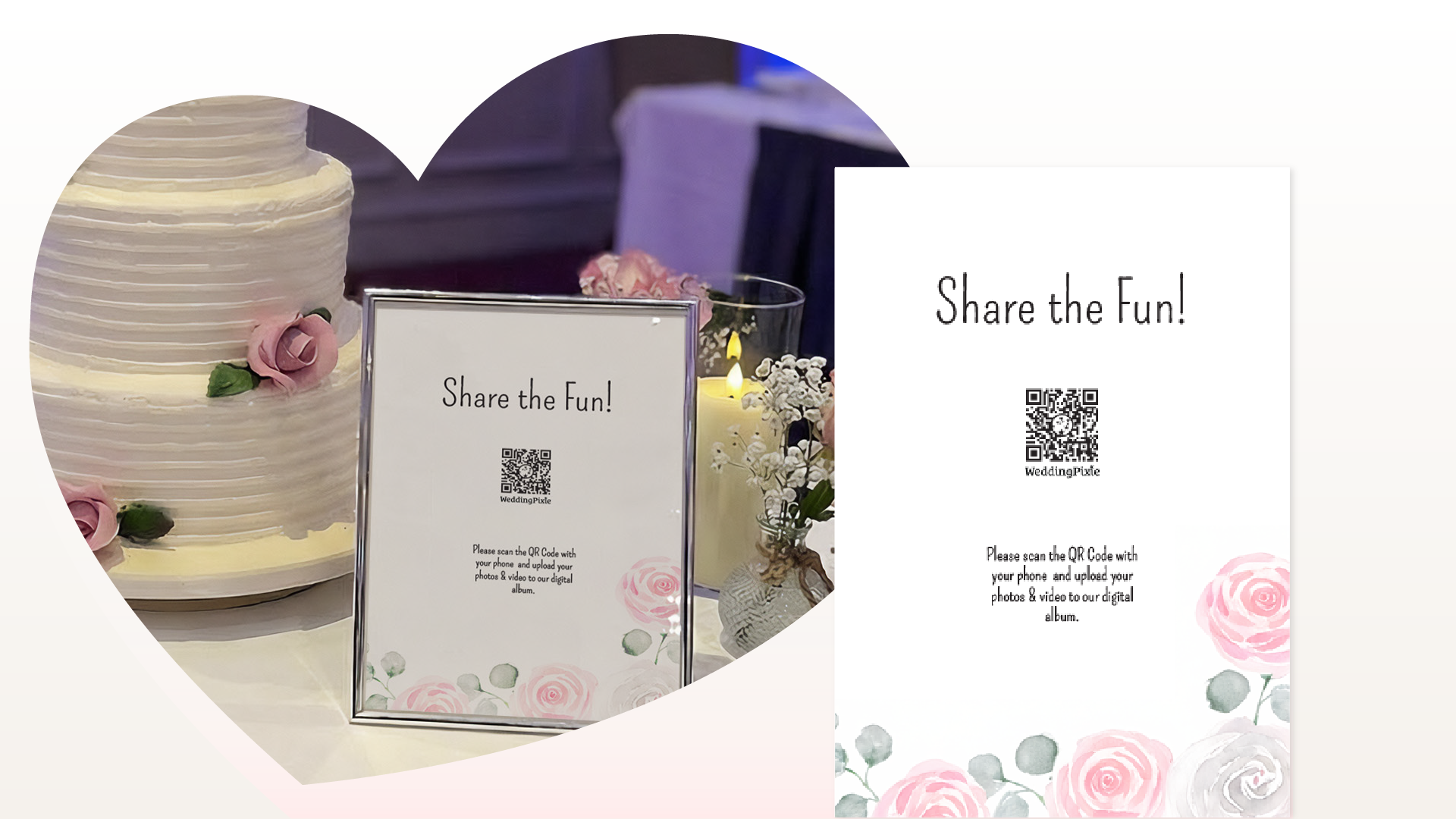
QR codes work best when they feel intentional. Rather than placing a single sign in one location, think about your wedding timeline and the moments you may not see yourself. Strategic placement allows you to capture the anticipation before the ceremony, the energy of the drinks reception, and the spontaneity of the dance floor.
For inspiration on different wedding signage aesthetics, see our signage design ideas.
Start with the Flow of the Day
Every wedding follows a rhythm. Guests arrive. They wait. They gather. They sit. They celebrate. The most effective QR code placements align with these natural pauses.
If guests are standing with a drink in hand, waiting for the ceremony to begin, that is an ideal moment. If they are seated at dinner, relaxed and taking group photos, that is another. Placement works best when guests have both visibility and time.
If you are deciding on appropriate dimensions for each location, consult our signage size guide.
Ceremony Programs and Arrival Moments
The ceremony often contains moments the couple does not see, especially before walking down the aisle. Including a QR code on the back page of a ceremony booklet or welcome card allows guests to scan while waiting.
During this time, guests often take candid photos of each other, the venue, and the atmosphere. A visible upload invitation encourages those photos to be shared rather than remaining on individual phones.
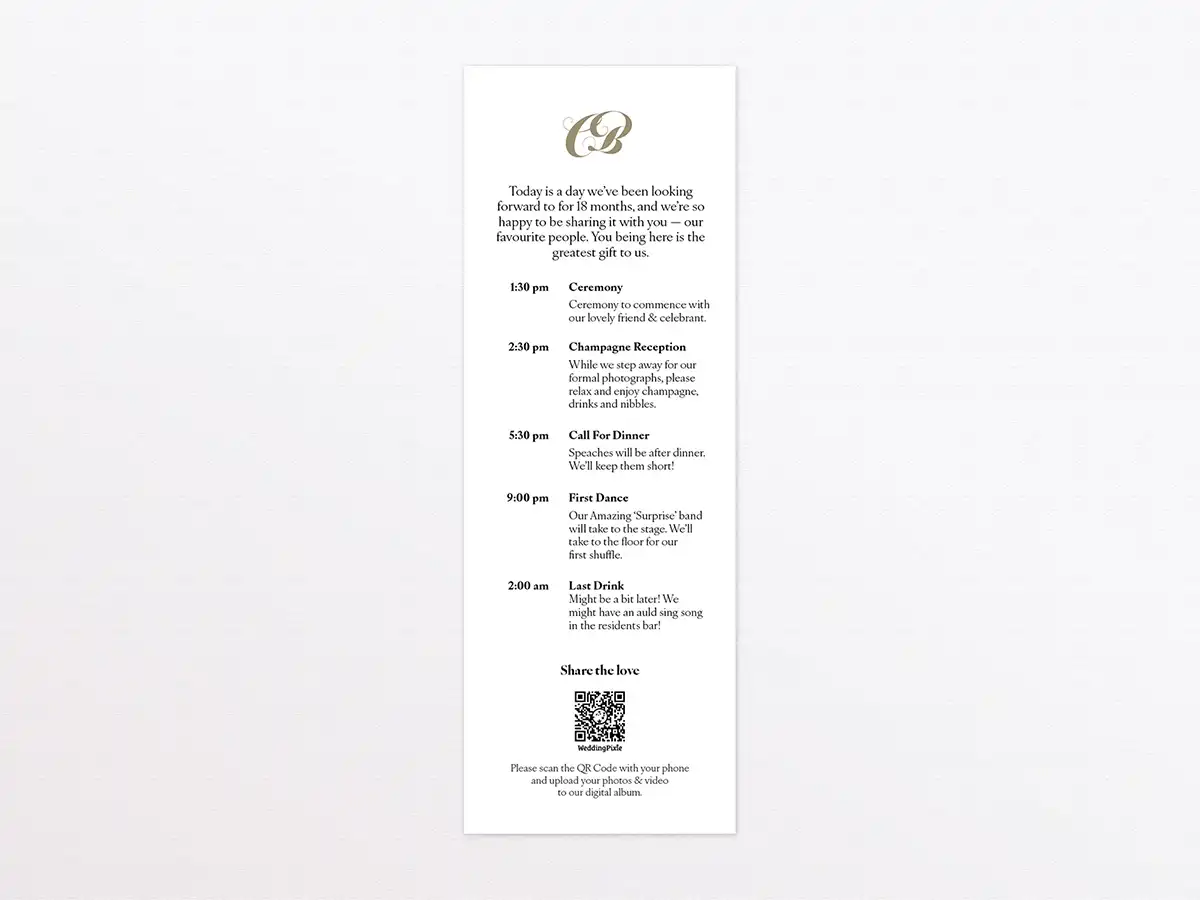
Reception Entrance and Welcome Area
The entrance to the reception venue is one of the strongest placement opportunities. Guests are arriving, greeting friends, and settling in. This is when lighting is often at its best and when anticipation is high.
Couples frequently miss parts of the early reception while taking professional photographs. A QR code at the entrance helps capture what happens during that time from your guests’ perspective.
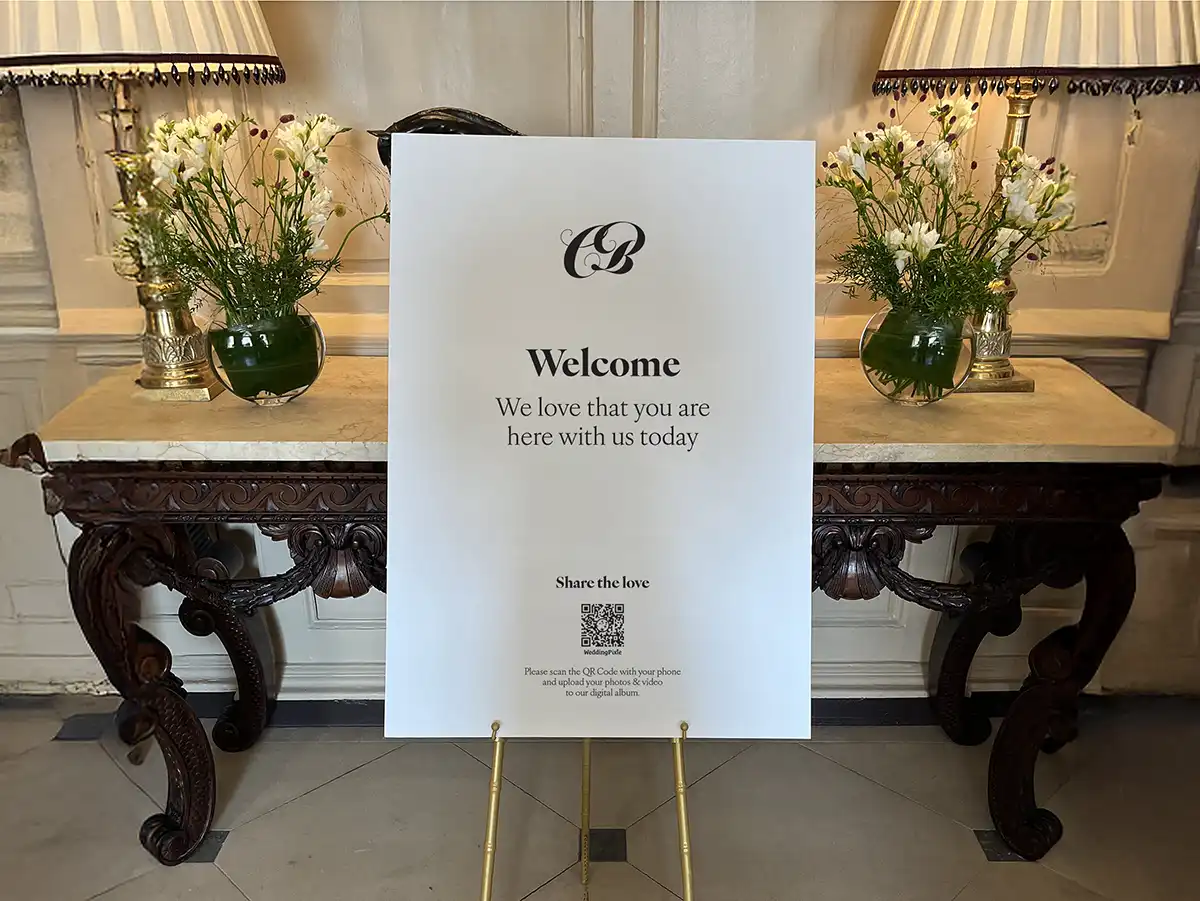
Place the QR code at the bottom of the welcome sign. It should be subtle and not overpower the main welcome message. A small QR code with clear wording such as “Scan to upload your photos” is enough.
Dinner Tables and Seating Plans
Dinner tables create natural clusters of guests. People are seated, relaxed, and likely to take group photos. Integrating QR codes into menus, table numbers, or small display cards allows uploads to happen organically.
Similarly, seating plan areas gather guests in one place. As people search for their names, they often take photos. A clearly displayed QR code nearby increases the likelihood that those images are shared.
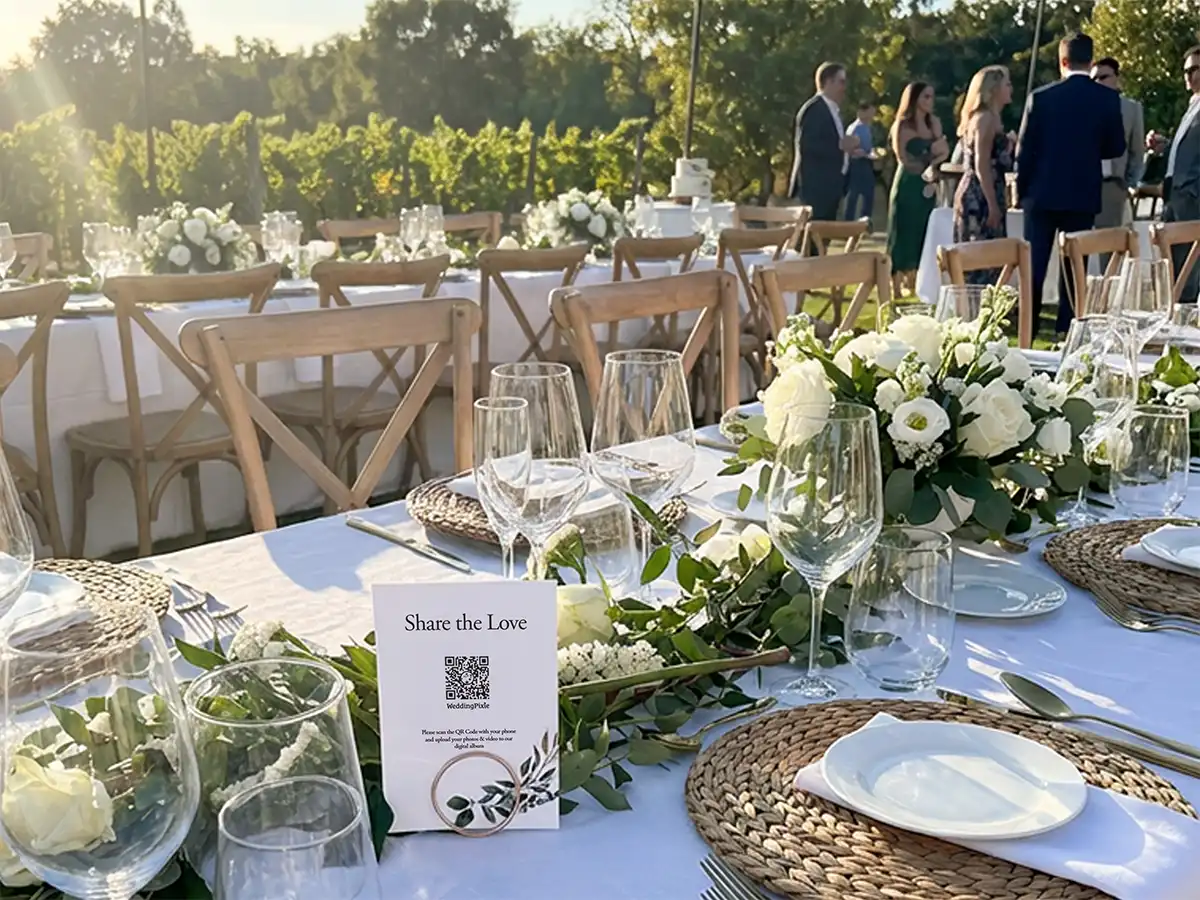
Cake-Cutting and Key Moments
Iconic moments such as the cake cutting attract attention from every angle. Guests will already be taking photos and videos. Placing a QR code near this focal point ensures those images can be uploaded immediately rather than forgotten later.
Because this area is usually well-lit and central, it supports both scanning and participation.
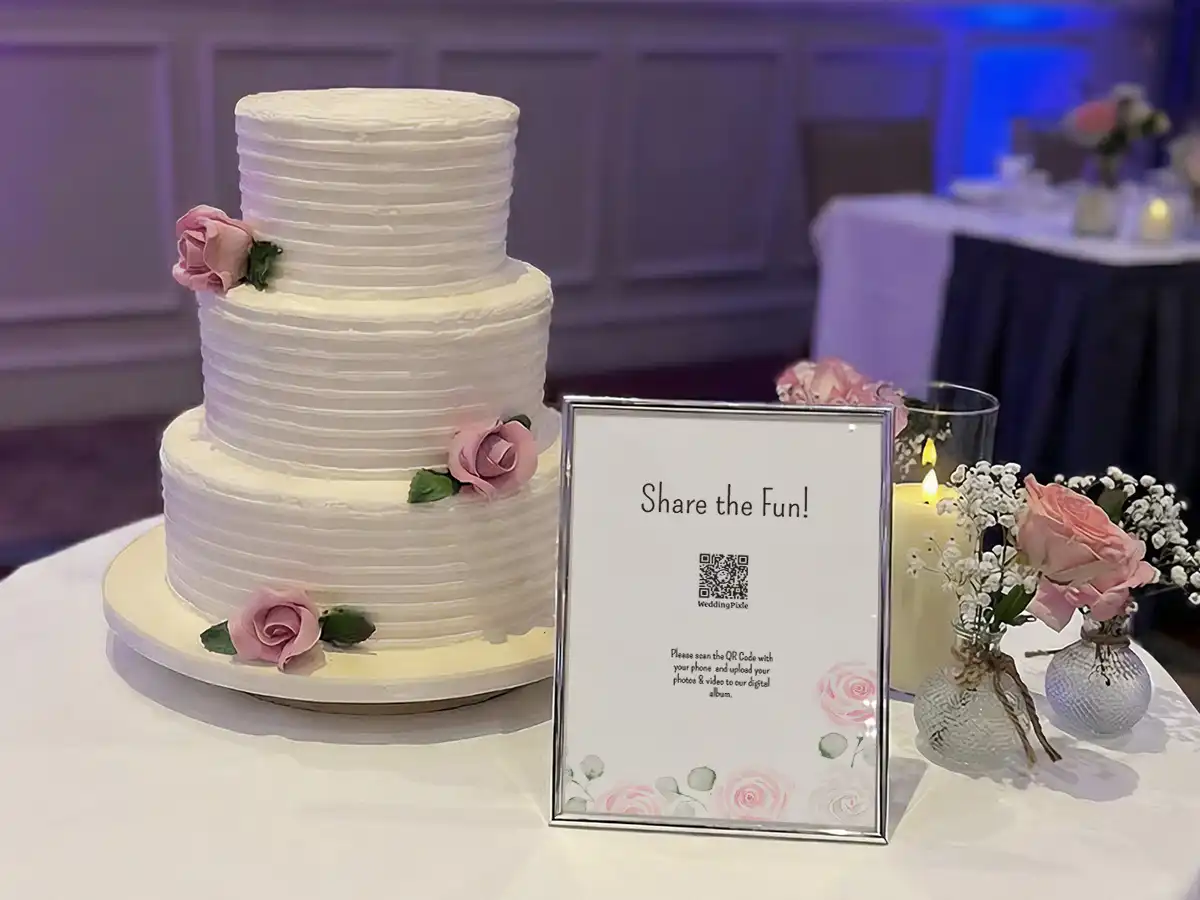
Photo Booths and Entertainment Areas
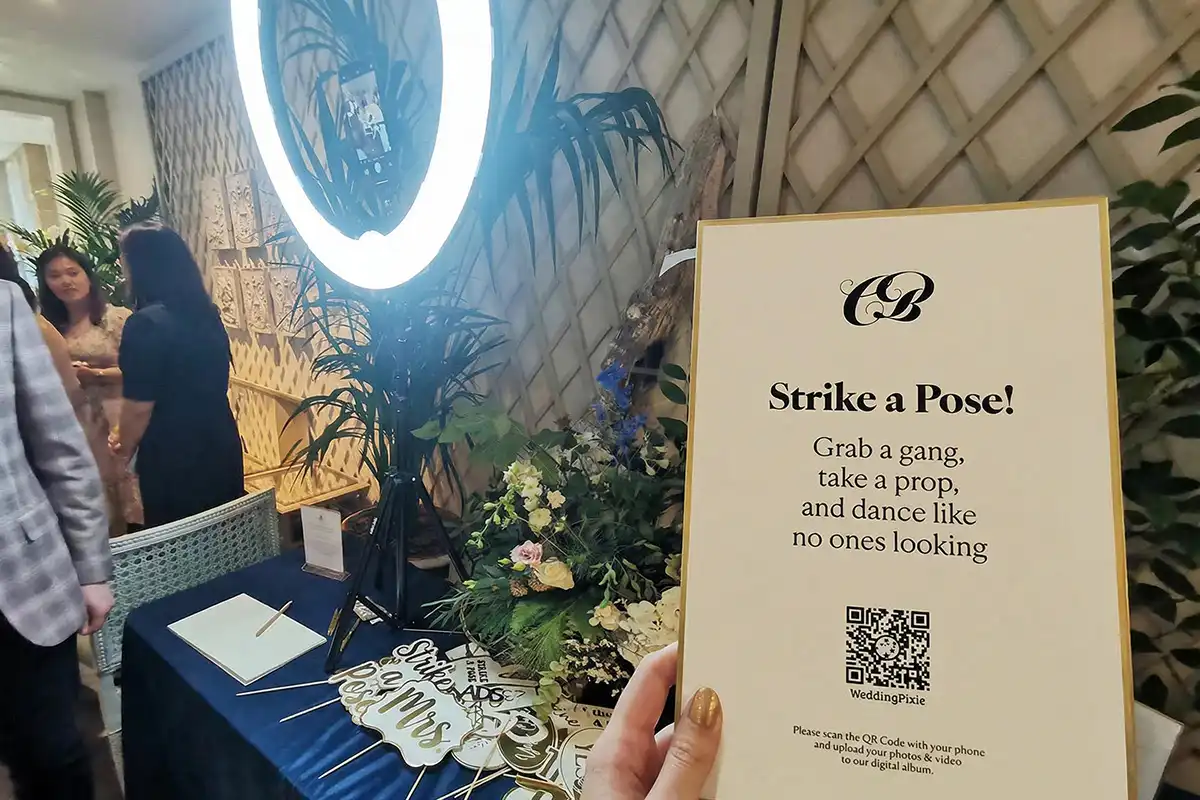
If your wedding includes a photo booth, live band, or entertainment area, these locations naturally generate high-energy content. Guests are already engaging with cameras. A nearby QR code reinforces the action of sharing.
These areas are particularly effective for short videos and candid moments that complement professional photography.
The Dance Floor
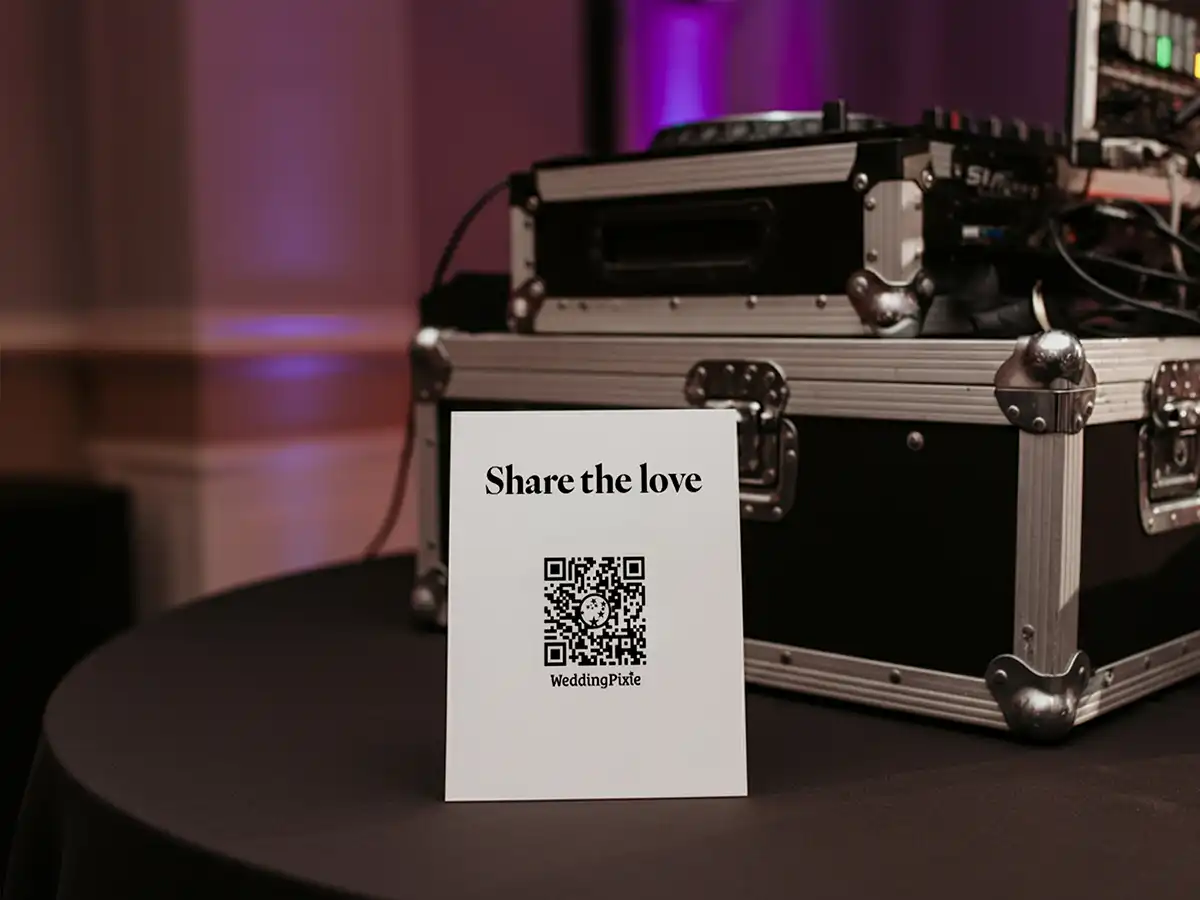
As the evening progresses, the dance floor becomes one of the most dynamic areas of the venue. Guests are animated and often recording short clips. A QR code positioned near the DJ booth or bar area can capture some of the most joyful, unfiltered moments. This placement encourages guests to share the fun as it happens, rather than waiting until the end of the night when they may forget.
Slideshow On Your Day Two
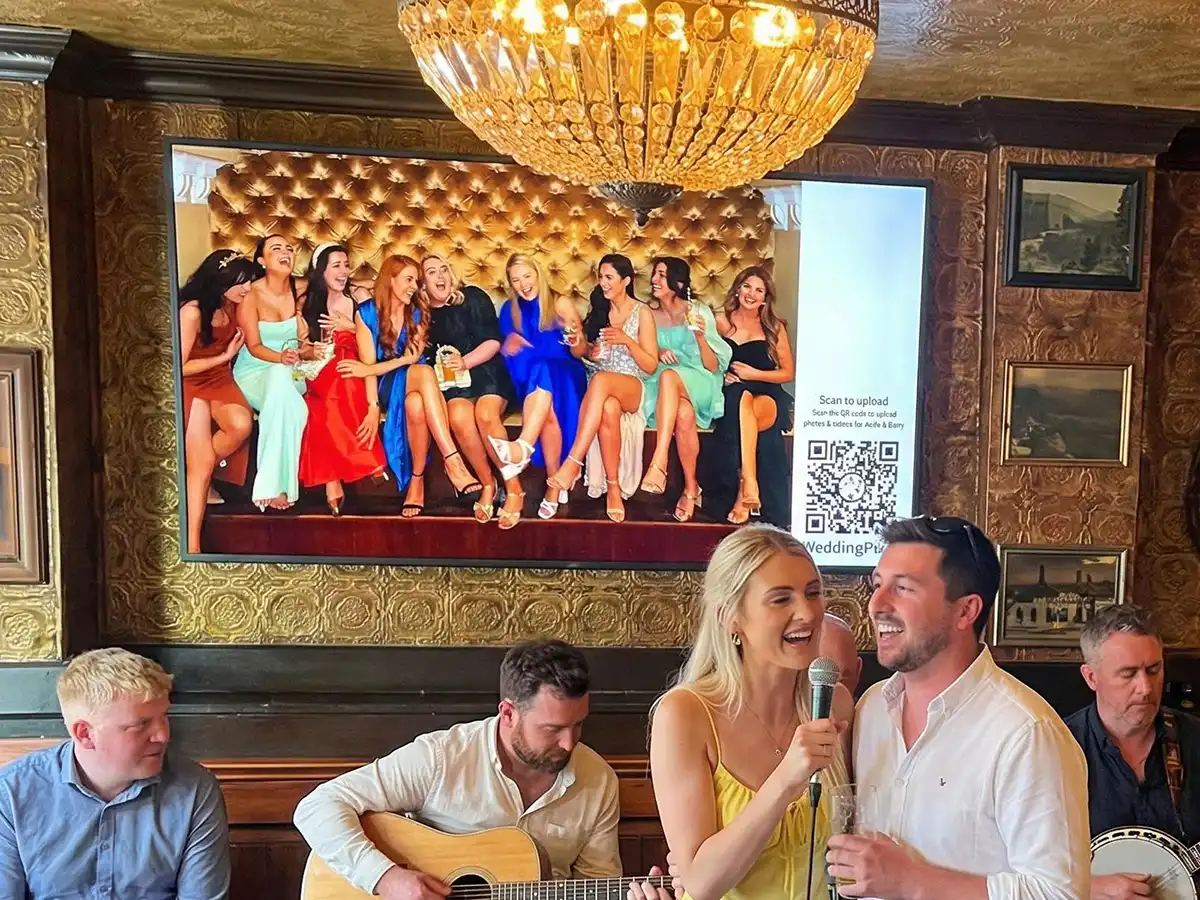
If your venue has a screen or projector, displaying a slideshow of guest photos alongside the QR code can create a powerful feedback loop. Guests see their photos appearing in real time, which encourages more participation. This is especially effective during the your day two events when guests are relaxed and socializing and reliving the previous day's moments.
To ensure your signage is tested and reliable before the day, follow our QR signage checklist.
Frequently Asked Questions
- Where is the best place to put a wedding QR code?
- The best place to put a wedding QR code is where guests naturally pause, such as at the drinks reception, on dinner tables, near the seating plan, or beside the guest book area. Visibility and timing matter more than decoration.
- Is one QR code sign enough at a wedding?
- In most cases, one sign is not enough. Placing QR codes in multiple locations throughout the venue increases visibility and significantly improves the number of guest photo uploads.
- When should QR codes be displayed during the wedding?
- QR codes should be visible from guest arrival through to the dance floor. Early visibility during drinks reception and dinner usually generates the highest engagement.
- How do I get more guests to scan the QR code?
- Clear instructions such as “Scan to upload your photos” increase participation. Placing the code at eye level and in well-lit areas also improves scan rates.
- Can I put a QR code on wedding programs?
- Yes. Including a QR code on ceremony programs or booklets allows guests to scan while waiting for the ceremony to begin, which can increase early uploads.


